Standing in front of a shelf of seals, you may wonder which label actually means something. Coffee certifications compared: each covers different ground, from price floors to shade trees, so match the seal to what you care about.
This comparison sits within the wider topic of sustainable coffee, where labels are one tool among several.
| Item | Value |
|---|---|
| Share of coffee grown that is certified | About 55% |
| Bird-Friendly shade standard | At least 40% shade cover; canopy at least 12 meters high |
| Bird-Friendly certificate length | Three years |
| USDA organic seal | At least 95% organic |
| Fair Trade minimum price (Coffee Habitat guide) | $1.31 per pound; $1.51 if also organic |
| Rainforest Alliance seal content (Coffee Habitat guide) | As little as 30% certified beans |
These figures come from Coffee Habitat’s quick guide and Ethical Consumer’s certification guide. Standards and prices change, so check the source before you rely on them.
What a coffee certification actually checks
A certified coffee has been produced under guidelines that growers adopt and an independent third-party organization sets and verifies, according to a University of Florida extension publication. The same publication says all programs share four features:
- Distributors pay premiums for certified coffee, so farmers receive more income.
- What is certified is the way the coffee was produced.
- An inspector from an independent agency verifies the criteria, and the farmer or an association of farmers pays for the visit.
- Certification is voluntary, and farmers decide whether to take part.
Beyond those shared features, programs pursue social, environmental, economic or quality goals, and which one leads differs from label to label. That is why two seals on the same bag can tell you very different things.
Certification is widespread: Ethical Consumer reports that about 55% of coffee grown is certified. It adds that only a fraction of the amount grown to certification standards is sold on those terms.
Fairtrade, Rainforest Alliance and UTZ compared
Fairtrade is the label most closely tied to pricing. Ethical Consumer describes a minimum price that must be paid when the market price falls below it, plus a fixed premium on top of the market price. Fairtrade certification is granted to farmers’ cooperatives or associations rather than individual farmers, according to UF/IFAS, and it does not require coffee to be organic.
One quick guide from Coffee Habitat lists a Fair Trade minimum of $1.31 per pound, or $1.51 if the coffee is also certified organic. The guide gives no publication date, so treat those figures as indicative rather than current prices.
Fair trade is not a protected term, so Ethical Consumer advises looking for the single capitalised word Fairtrade with its symbol. Fairtrade International was established in Germany in 1997, according to the Tico Times. A separate explainer on fair trade coffee meaning covers the label in more depth.
Rainforest Alliance works differently. Ethical Consumer says it has no fixed pricing structure but pays a premium over the market price, though that premium is much lower than the Fairtrade premium. Certified farms must report on indicators such as the number of shade trees and the amounts of fertiliser, water, fossil fuels and electricity used.
The Tico Times noted in March 2022 that coffee only had to have 30% grown under Rainforest Alliance criteria to carry the certification. The Coffee Habitat guide gives the same 30% threshold and says the proportion should be indicated on the pack. Rules may have changed since, so read the label closely, and see the explainer on rainforest alliance certified coffee for more detail.
UTZ emphasised transparency and traceability and efficient farm management, according to Coffee Habitat.
Bird Friendly and organic: the habitat and soil labels
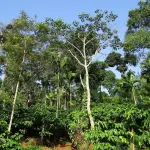
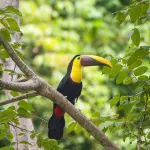
Bird-Friendly was developed by ecologists at the Smithsonian Migratory Bird Center. Coffee Habitat lists its criteria as a canopy at least 12 meters high, a minimum of 40% shade cover and 11 species of shade trees, and the coffee must also be certified organic.
The same guide says the certification lasts for three years rather than one. The Tico Times adds that Bird Friendly does not cover labor pay or work conditions, so it speaks to habitat rather than wages.

The organic seal focuses on farming inputs. Coffee Habitat says the USDA organic seal indicates a product is at least 95% organic, and that requirements include no prohibited substances on the land for at least three years.
UF/IFAS notes that shade is not an organic criterion, although organic coffee is usually grown with some shade because farmers need organic matter from fallen leaves. Organic coffee grown in full sun can be produced, but it is costly for farmers.
The main labels at a glance
| Label | Main focus | Notable rule |
|---|---|---|
| Fairtrade | Prices and community premium | Minimum price when the market falls below it, plus a fixed premium |
| Rainforest Alliance (including UTZ) | Farm management, training and environment | Pays a premium but has no fixed pricing structure |
| Bird Friendly | Shade and bird habitat | Must also be certified organic |
| USDA organic | Farming inputs and soil | At least 95% organic for the seal |
This table draws on Ethical Consumer’s certification guide and Coffee Habitat’s quick guide. Standards change, so check the sources before you rely on it.
How do you read a coffee label?
A few questions help you decide what a seal is telling you:
- Who issues it? Because fair trade is not a protected term, check for the exact certifier name and symbol.
- How much is certified? A seal can appear on a blend, so look for the stated proportion.
- What does it leave out? Bird Friendly does not address labor pay, and Fairtrade does not require organic.
- Is price part of the standard? Fairtrade sets a minimum price, while Rainforest Alliance pays a premium without a fixed price.
Carbon-neutral claims need extra care. The Tico Times says there is no uniform, internationally recognized methodology for deciding whether a company is carbon neutral.
What certification does not guarantee
Certification has costs. Coffee Habitat says producers, and in some cases buyers, must pay various fees, and a Tea & Coffee Trade Journal piece says certifications come at a cost to producers and to the brands seeking them.
The same June 2025 report says there continue to be reports of child labour, extremely low wages and carbon-intensive practices despite improvements in the industry.
Ethical Consumer says many studies have cast doubt on how rigorous the policing of these schemes is. It also considers Fairtrade, with its minimum prices and higher premiums, generally the stronger label; others weigh training and environmental criteria more heavily, so the right choice depends on your priority.
Frequently asked questions
Is Fairtrade the same as Rainforest Alliance?
Show answer
No. The Tico Times says the two are often assumed to be the same but have distinct differences, and Ethical Consumer notes that Fairtrade sets a minimum price while Rainforest Alliance does not.
Does organic coffee mean it is fair trade?
Show answer
Not automatically. UF/IFAS says coffee can be certified Fairtrade whether it is organic or not, while Bird-Friendly coffee must also be organic according to Coffee Habitat.
Does a certification mean better-tasting coffee?
Show answer
Not by itself. UF/IFAS lists quality as one possible aim of programs, alongside social, environmental and economic aims, but what is certified is the way the coffee was produced.
Who pays for certification?
Show answer
UF/IFAS says the farmer, or sometimes an association of farmers, pays for the inspection visit. Coffee Habitat adds that producers, and in some cases buyers, pay various certification fees.