Wondering whether shade grown coffee benefits wildlife or is just a label? Research says it does: shade farms host more birds than sun farms, though they cannot replace natural forest.
Shade is one piece of the bigger picture of sustainable coffee, and this page looks at what it does for biodiversity.
| Item | Value |
|---|---|
| Bird Friendly canopy cover requirement | 40% (as of the Daily Coffee News report, August 2026) |
| Bird Friendly shade tree species requirement | 10 different species per hectare (as of the same August 2026 report) |
| Bird Friendly certified coffee volume | 34 million pounds |
| Bird Friendly habitat area | More than 37,000 acres |
| Participants managing Bird Friendly farms | More than 5,100 |
These figures come from the Smithsonian National Zoo’s Bird Friendly page, which carries no date, and from Daily Coffee News. Standards and totals can change, so check the sources before you rely on them.
What shade-grown coffee is
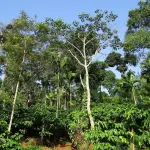
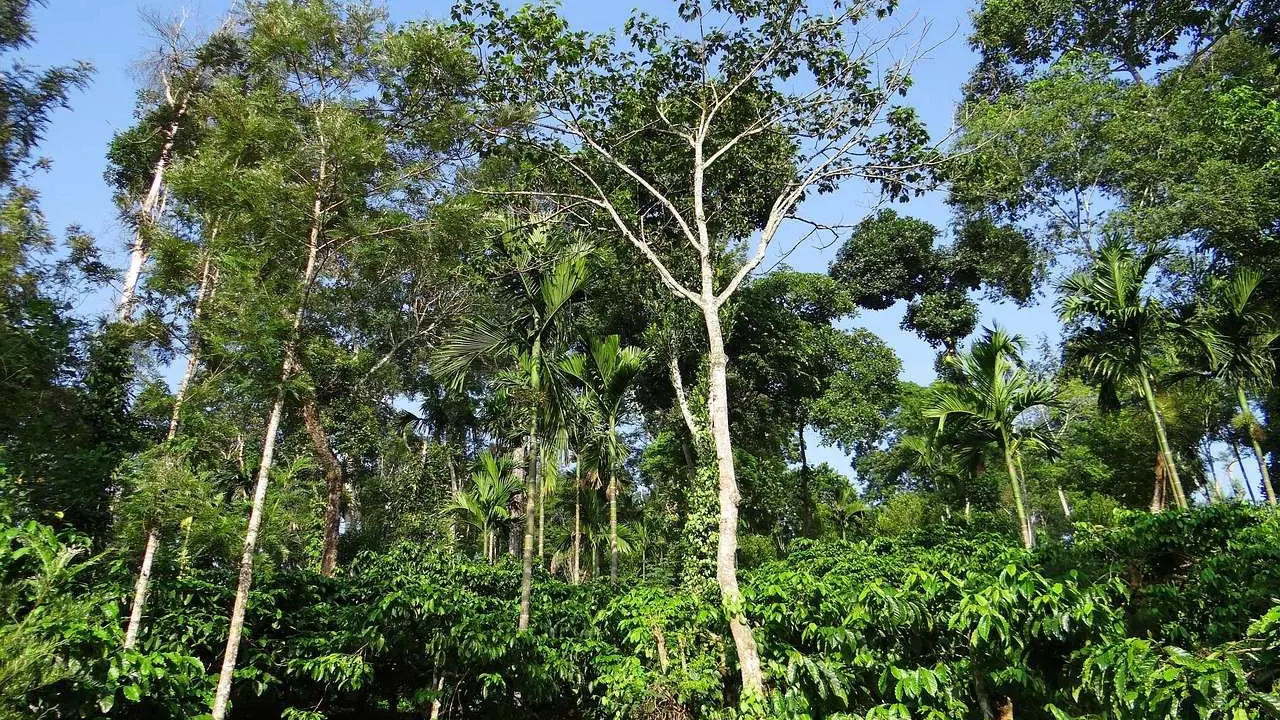
Shade-grown coffee is an agroforestry system: coffee grown in association with a diversity of trees that provide shade, plus useful products such as firewood, fruits, medicinal plants and construction materials. The Smithsonian Migratory Bird Center says these systems act in many ways like forests, because their high species and structural diversity creates forest-like conditions.
The contrast is sun coffee, grown in monoculture with few or no shade trees. A University of Utah researcher writing in The Conversation in February 2015 said such farms harbor minimal biodiversity and are a cause of rainforest deforestation.
Not all shade is equal. The Smithsonian centre introduced shade-grown coffee to the industry in 1996 at the first Sustainable Coffee Congress, and its Bird Friendly criteria followed in 1997, defining quality shade in terms of habitat, as described on the Smithsonian page. Daily Coffee News has also noted that shade-grown does not necessarily mean bird-friendly, in its August 2026 report.
What research says about birds and wildlife
The broadest summary comes from the Smithsonian Migratory Bird Center, which reviewed more than 60 studies from Central and South America to Indonesia over 25 years. According to its own write-up, shade farms outperformed sun farms on several measures:
- Increased numbers and species of birds, and improved bird habitat
- Soil protection and erosion control
- Carbon sequestration
- Natural pest control
- Improved pollination
The same centre runs the Bird Friendly programme, so treat this as an interested party’s summary and read it alongside the independent field studies below. The review also grants that sun-grown systems can have higher yields.
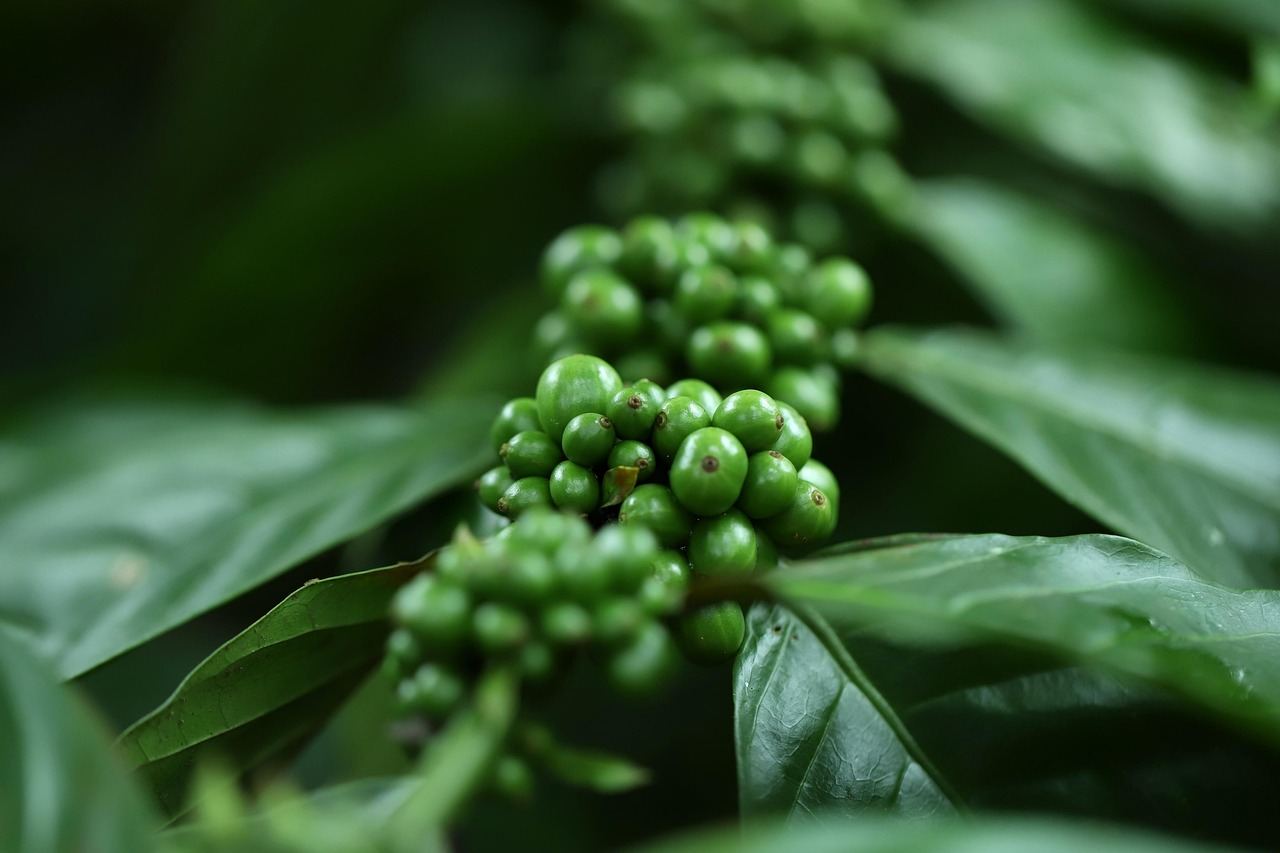
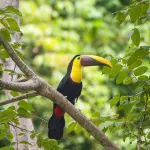
A study in southwestern Ethiopia, described by its author in The Conversation, found that shade coffee farms had more than twice as many bird species as forest sites. All but one of nine migratory species were captured only in shade coffee habitat. Forest sites still had a much higher relative abundance of forest specialist species.
A long-running Costa Rican study tells a more cautious story. National Geographic reported in April 2019 on a 12-year study of 57,255 individually banded birds representing 265 species at 19 sites, published in the Proceedings of the National Academy of Sciences. Raising coffee farm tree cover from 7 to 13 percent gave birds a significant boost, but farms with some shade were still experiencing species decline and were no substitute for large swaths of protected forest.
Why shade alone does not protect every bird
A Colombian study of the Sierra Nevada de Santa Marta, published in Biological Conservation in June 2022, compared three ways of arranging a coffee landscape, according to a news release from the research team’s institution. The comparison rests on computer simulations built from bird surveys.
- Land-sharing: wildlife-friendly shade trees integrated into plantations.
- Land-sparing: intensified farming combined with forest preservation.
- Hybrid: shaded coffee interspersed with forest.
Simulated land-sharing landscapes supported up to 17 more generalist species per point than sparing landscapes, while forest specialists were richest in land-sparing and hybrid simulations. In plain terms, shade protects more generalists and nonbreeding birds, and set-aside forest protects more forest specialists and breeding birds. The authors concluded that both strategies are needed to conserve the full bird community.
A newer study in the Journal of Applied Ecology, covered by Daily Coffee News on August 4, 2026, looked at Cundinamarca in Colombia’s Eastern Andes. Forest cover within a 2-kilometer radius positively predicted bird occupancy in every guild studied. Forest specialists needed more than 32% forest cover within that radius to reach median occupancy and were nearly absent from coffee farms.
These results have fed into certification design. As of Mongabay’s July 2022 report, the Smithsonian planned to update its criteria using the Colombian findings. Its researchers said in a June 2022 release that a revised standard would keep promoting native shade canopy while also rewarding farms that set aside forest reserves.
Benefits for farmers and climate resilience
The Smithsonian review argues that trees offer direct and indirect income to farmers. It calls the hidden yield of a shaded system the non-coffee products it provides: firewood, fruits, building materials, medicinal plants and, on several farms, ecotourism. It adds that farmers who shade their coffee may be less vulnerable to higher temperatures and rainfall.
Birds may also earn their keep. The Conversation article cites a Jamaican study that concluded insect-eating birds benefited coffee farmers by $125 per acre per year through pest control. It also says Ethiopian farms with shade-grown certification may receive as much as 20% more revenue per unit of crop.
Those are possibilities rather than guarantees. An agroecologist quoted by Mongabay noted that coffee markets, prices, land access and social inequalities may determine conservation outcomes whichever strategy is pursued. How far shade-related income changes a household’s finances is a separate question, covered in a guide on how much do coffee farmers earn.
How to read shade-grown and Bird Friendly labels
The Smithsonian describes Bird Friendly coffee as certified organic and produced on farms with shade cover that provides habitat for migratory and resident birds. As of Daily Coffee News’s August 2026 report, the certification requires 40% canopy cover, 10 different shade tree species per hectare and organic certification. Other schemes differ: National Geographic noted in April 2019 that Rainforest Alliance certifications tend to cover environmental impacts more generally, often alongside labor welfare.
A few checks help when you are choosing a bag:
- Look for a named certification rather than a bare “shade-grown” claim.
- Check whether the standard sets canopy cover and tree species numbers.
- If Bird Friendly coffee is not available, researchers quoted by Mongabay in July 2022 suggested certified organic options, since coffee typically can’t be farmed without shade in an organic system.
- Remember that nearby forest matters too, as the Colombian studies above show.
The basics of how that organic label works are explained in a guide to organic coffee certification.
Frequently asked questions
Is shade-grown coffee the same as Bird Friendly coffee?
Show answer
No. Bird Friendly is a specific certification, while “shade-grown” is a general description. Daily Coffee News has noted that shade-grown does not necessarily mean bird-friendly.
Can shade-grown coffee replace natural forest?
Show answer
No. The Smithsonian Migratory Bird Center states that such farms cannot replace natural forest, as many animal species require natural areas. The Colombian studies suggest shade and forest work best together.
Does shade-grown coffee yield less?
Show answer
It can. The Smithsonian review acknowledges that sun-grown systems can have higher yields, but argues that shaded farms outperform them on sustainability measures and offer extra products from the trees.
Does shade make coffee taste better?
Show answer
The Smithsonian page says there is evidence from coffee connoisseurs that shade improves the taste. It does not give detailed data, so treat the claim as unproven.