Worried about coffee deforestation in your cup? Coffee does clear forest, but it is a small share of global loss, and the debate now centres on how to measure it accurately.
This page sits within the wider topic of sustainable coffee, and it looks at what the evidence says about forests and farms.
| Item | Value |
|---|---|
| Forest lost per year for coffee over the last two decades | About 130,000 hectares |
| EU share of global coffee consumption | About one-third |
| Coffee production growth expected by 2050 | Expected to triple |
| EUDR deforestation cutoff date | 31 December 2020 |
| EUDR application date for most companies (as of Mongabay’s December 2025 report) | 30 December 2026 |
| Mexican coffee plots flagged as non-compliant by maps in a pilot of 600 plots | About three-quarters |
These figures come from Mongabay’s December 2024 report and its December 2025 report. They can change, so check the sources before you rely on them.
How much forest does coffee clear?
Over the last two decades, about 130,000 hectares of forest have been lost each year to coffee cultivation, according to Mongabay. The same report says coffee production is expected to triple by 2050 to meet growing demand, which puts more pressure on forest-rich growing areas.
Set against the world total, that figure is modest. Fresh Cup describes it as a drop in the bucket of the roughly 10 million hectares of forest the world loses every year, yet still enough for coffee to fall under the EU’s deforestation legislation.
Experts cited by Perfect Daily Grind in May 2023 estimate that large-scale agriculture accounts for around 75% of deforestation worldwide. The same piece says coffee production is not necessarily a driver of deforestation, but that clearing does take place on coffee farms and in the areas around them.
The same article reports Global Forest Watch data for 2020 and 2021. Brazil lost 6.28 million hectares of forest, over 70% of it commodity-driven, while Colombia lost 589,000 hectares (97%) and Vietnam 401,000 hectares (95%). These totals cover all commodities, so they give context rather than coffee’s own share.
Forest loss and warming are connected, and the effects on growing regions are covered in climate change and coffee production.
Why shade-grown coffee confuses forest maps
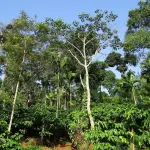
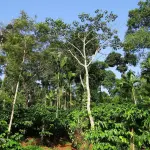
Satellite and remote-sensing maps are meant to show whether land was cleared after a cutoff date. Crops like soy or pasture look starkly different from forest, but much coffee grows under leafy canopies, so the difference on the map is subtle, according to Mongabay’s December 2025 report.
A land system scientist quoted there said traditional coffee systems really look like a forest. In an early Mexico pilot covering 600 coffee plots of 1-5 hectares, many of them decades old, the maps suggested that three-quarters of the plots did not comply with the EU rules.
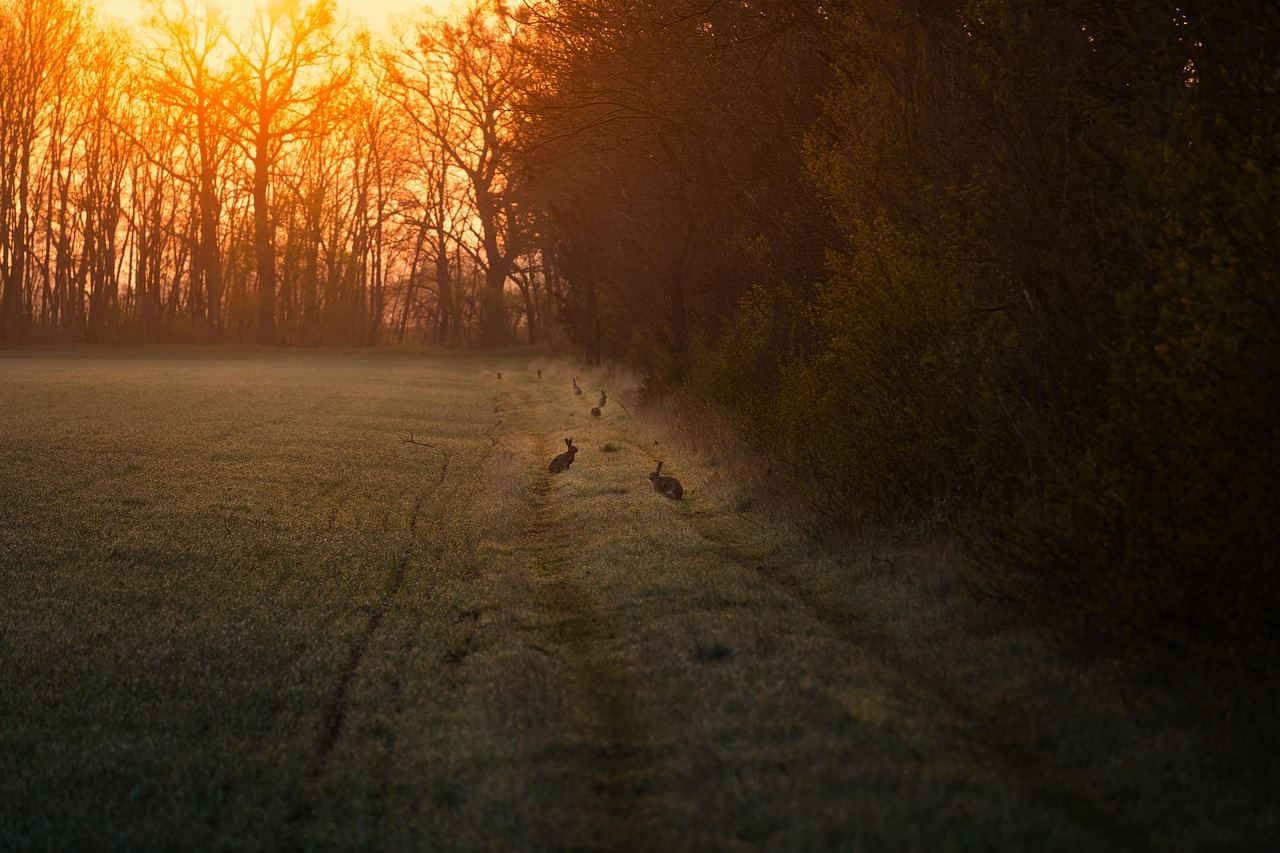
The review behind that report tested 21 global forest and tree-cover maps. Only two met all the indicators used to assess risk under the regulation, and most tended to overestimate how much forest once existed in an area.
A paper listed on Evidensia points the same way. It flags persistent challenges in mapping agroforestry systems and a risk of falsely detecting deforestation on coffee grown under them.
What the EU Deforestation Regulation requires
The regulation, known as the EUDR, covers seven commodities: cattle, cocoa, coffee, palm oil, rubber, soy and timber, plus products made from them. According to Mongabay, the cutoff date is 31 December 2020, and products linked to deforestation after it are a problem for importers.
A Tea & Coffee Trade Journal post of 27 February 2025 summarises the definitions behind it. A forest is land of more than 0.5 hectare with tree canopy cover above 10% that is not primarily under agricultural or urban use, and deforestation is the conversion of forest to agricultural use.
The timeline has moved. Mongabay’s December 2024 report gave an application date of December 2025, but as of its December 2025 report, most companies must comply from 30 December 2026, after a second postponement in as many years.
As of Fresh Cup’s June 2024 article, companies that fail to comply could be fined up to 4% of their EU-based revenue, have products confiscated or be banned from the bloc. That article also describes a rule that makes traceability to the exact source central to compliance.
Can agroforestry protect forests?
Scientists from CIFOR-ICRAF told Mongabay that agroforestry can act as a buffer that stabilises farm-forest frontiers. They also said agroforests cannot replace the ecological functionality of primary forests.
Researchers cited in Mongabay’s December 2025 report argue that maps alone are not enough to separate agroforestry from forest. They suggest adding other evidence, such as plots shown to exist before 2021:
- Remote-sensing data as the starting point.
- Ground-truthing of individual plots.
- Official land-use registration records in the producing country.
What it means for farmers and buyers
The EU consumes about one-third of the world’s coffee, according to Mongabay, so its rules shape sourcing decisions elsewhere. Fresh Cup reported in June 2024 that some buyers were moving away from countries where traceability is difficult.
The same article says there is concern that the cost of geomapping, verifying and storing farm data will be passed down the supply chain to farmers, who may then have to pay or miss out on the European market.
The paper listed on Evidensia as published in May 2026 reports that operators had insufficient capabilities for processing remote-sensing data. It also notes a risk that operators abandon smallholder regions.
A separate guide explains the fair trade coffee meaning for readers comparing labels.
Frequently asked questions
Is coffee a major cause of deforestation?
Show answer
Coffee cultivation has cleared about 130,000 hectares a year over two decades, per Mongabay. That compares with roughly 10 million hectares of forest lost worldwide each year, per Fresh Cup.
What is the EUDR cutoff date?
Show answer
Products must not come from land deforested after 31 December 2020, according to Mongabay’s December 2025 report. That report puts the application date for most companies at 30 December 2026.
Does shade-grown coffee count as forest?
Show answer
The definition summarised by the Tea & Coffee Trade Journal in February 2025 excludes land primarily under agricultural use. In practice, maps often struggle to tell agroforestry from forest, as Mongabay reported in December 2025.
Can agroforestry replace natural forest?
Show answer
CIFOR-ICRAF scientists told Mongabay that agroforests cannot replace the ecological functionality of primary forests. They said preventing conversion of functional forest ecosystems needs effective policies.